Update faster than a PDF
Change availability, price, descriptions and options without reprinting a menu or making guests load a heavy document.
Digital menu and table ordering
Instead of one generic QR code for the venue, every table receives its own secure link. The system knows where the guest is seated before they start an order.
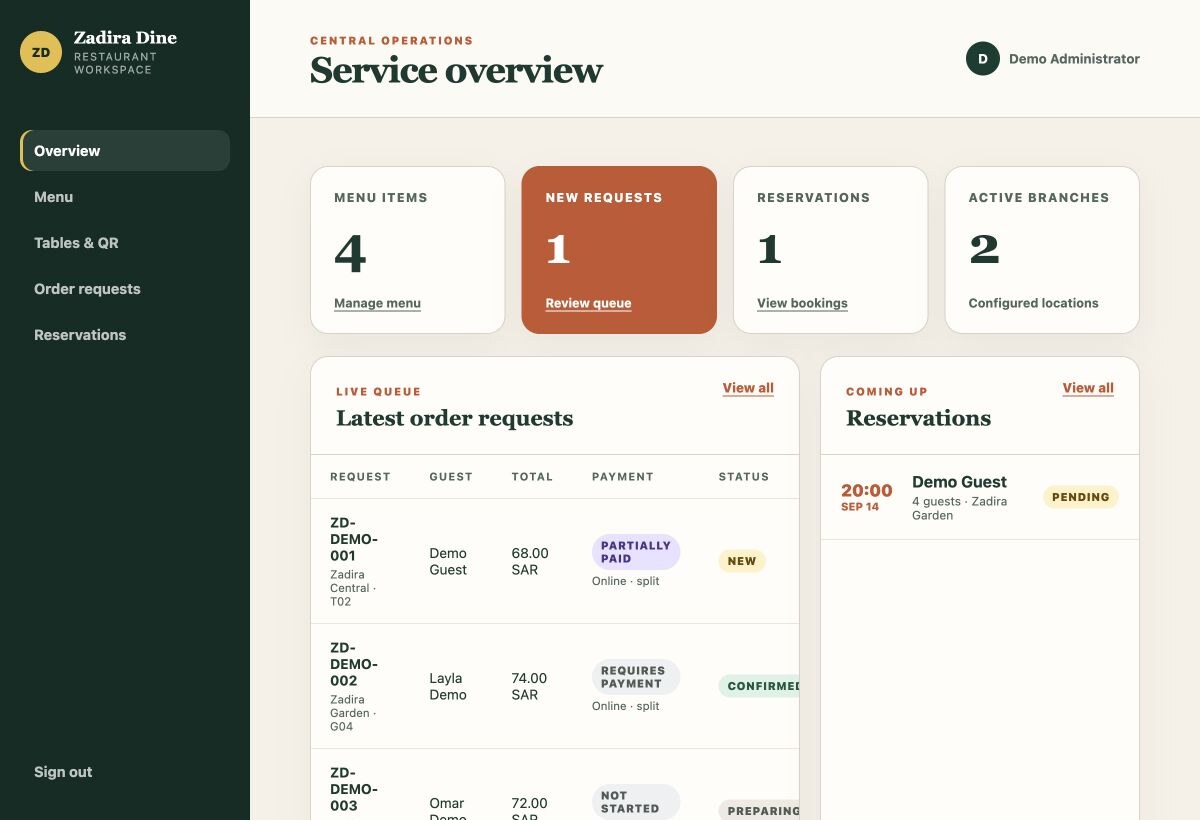
Zadira Dine
The link opens in the browser and asks the server to resolve its table and branch. A valid active token returns trusted table context; an invalid token cannot be replaced with a browser-supplied table number.
Change availability, price, descriptions and options without reprinting a menu or making guests load a heavy document.
Categories, search, photos and clear actions replace pinching and zooming through PDF pages.
A long, rotatable public token resolves the table on the server without exposing a guessable sequence.
The QR contains a random public token assigned to one table.
Laravel checks that the table is active and returns trusted branch and table data.
The frontend sends the verified token when it creates an order.
The order is stored against the server-resolved table, not user input.
The interface is touch-friendly and presents language, price, images and options clearly. Staff can rotate a table token and print a fresh QR card from the admin whenever needed.
No. The menu opens directly in the phone browser after scanning the QR code.
Not in the trusted flow. The server resolves the table from the token inside the QR link.
Staff can rotate the token in the admin, invalidating the old link before printing a fresh QR card.
Open the preview to explore search, categories, the cart and sample table context.